Public services use emergency backup communications to coordinate people, resources, and essential operations when normal phone, internet, cellular, or radio networks become unavailable. A reliable strategy uses independent communication paths rather than relying on a single backup device or network.
Organizations with critical communication needs include:
• Emergency dispatch, police, fire, and emergency medical services
• Hospitals, public health departments, and emergency management agencies
• Electric, water, wastewater, natural gas, and telecommunications utilities
• Airports, public transit systems, ports, and highway management centers
• Government operations centers and critical infrastructure facilities
Backup options may include satellite phones and internet terminals, Land Mobile Radio systems, portable repeaters, microwave links, priority cellular service, mesh networks, and deployable command units. The right combination depends on where an organization operates, who must communicate, and which functions must continue during an emergency.
The central principle is redundancy. When an outage, disaster, cyberattack, or infrastructure failure disables one network, an independent system must be ready to carry essential voice and data traffic.
Why Essential Agencies Need Independent Communication
At Remote Satellite Systems, we understand how quickly a communications failure can interfere with public safety and community recovery. Dispatchers may lose contact with field teams. Hospitals may struggle to coordinate patient movement or reach regional partners. Utility crews may be unable to receive assignments as they assess damage and restore service.
Commercial networks are vulnerable to power loss, damaged cables, disabled towers, congestion, and cyber incidents. Even two connections may provide limited protection if both depend on the same local infrastructure.
Emergency backup communications add separate pathways that can remain available when terrestrial systems are disrupted. Effective planning begins by identifying the people, locations, and operational functions that cannot be left without contact.
Public Safety, Healthcare, and Emergency Management
Emergency dispatch centers, including 911 and 112 operations, need dependable backup systems to coordinate police, fire departments, and EMS providers during outages. Police may rely on redundant radio networks, mobile repeaters, or satellite communications, while fire departments need reliable links for dispatch, incident command, and mutual aid.
EMS teams may require backup connections between ambulances, hospitals, and dispatch centers. Emergency management agencies and government emergency operations centers at the local, regional, and state levels also depend on reliable systems to coordinate response across agencies and jurisdictions.
Healthcare organizations face equally demanding circumstances. Hospitals may need backup voice and data connections for patient coordination, disaster response, regional medical networks, and administrative decisions. Public health departments also rely on dependable communications during disease outbreaks, mass-casualty incidents, and natural disasters.
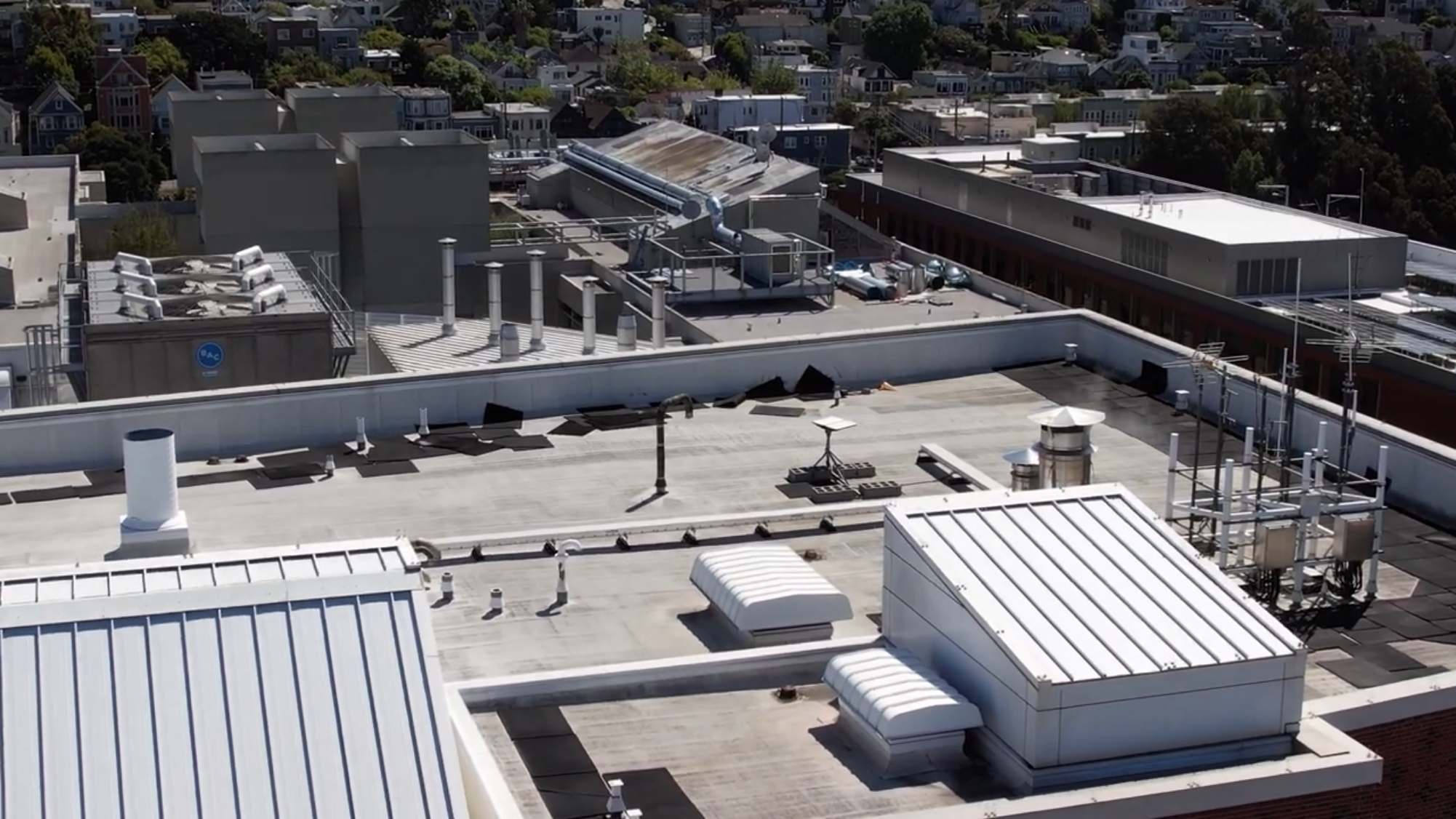
Our work with San Francisco General Hospital shows how this planning can translate into a working system. We upgraded the hospital’s older emergency satellite solution to a faster, lower-latency Low Earth Orbit platform. The project created a dedicated emergency network that operates separately from the hospital’s primary IT environment, supports voice and data, and can extend across multiple buildings.
The following video offers a closer look at the San Francisco General Hospital project and how an independent communication system can strengthen continuity in a complex public healthcare environment.
Utilities, Transportation, and Critical Infrastructure
Public services extend far beyond first response. Electric companies, water and wastewater utilities, natural gas providers, and telecommunications operators need dependable communication to evaluate damage, assign crews, monitor hazards, and share restoration updates.
Transportation agencies also manage operations that cannot simply stop when a network goes down. Airports, rail systems, public transit providers, highway and traffic management centers, port authorities, the Coast Guard, and other maritime rescue organizations may need backup connections across large or dispersed service areas.
Other organizations that benefit from emergency communication planning include:
- Public works departments coordinating road repairs and debris removal
- Search and rescue teams working in remote or damaged areas
- Schools and universities managing campus emergencies
- Weather and environmental agencies issuing warnings
- Dams, nuclear facilities, chemical plants, and oil and gas pipeline operators
- Humanitarian organizations supporting disaster relief
A hospital campus, utility control center, and mobile rescue team will not use identical equipment or follow the same procedures. Each system should be designed around its operating environment and continuity priorities.
Building Redundancy Through Multiple Technologies
No single technology is best for every incident. Satellite systems can bypass damaged terrestrial infrastructure, while radio networks support direct communication among field personnel. Priority cellular services may remain useful when commercial networks are operating but congested.
A layered system may incorporate:
- Satellite phones and satellite internet terminals
- P25, TETRA, or DMR Land Mobile Radio systems
- HF, VHF, and UHF radio equipment
- Portable repeaters and deployable base stations
- Microwave, redundant fiber, or IP links
- Mesh networks, mobile communications trailers, and command vehicles
- Amateur radio support through trained volunteers during disasters
These technologies should complement one another rather than function as disconnected pieces. A thoughtfully engineered system gives users practical alternatives and reduces the chance that one failure will isolate an entire organization.
Readiness Requires More Than Equipment
Backup technology only provides value when people can use it under pressure. Agencies need clear procedures, accessible equipment, dependable backup power, current documentation, regular testing, and practical training.
Exercises can expose depleted batteries, coverage gaps, outdated contact lists, or unfamiliar controls before a real emergency. Documentation should identify network layouts, equipment locations, operating responsibilities, and testing procedures so knowledge is not lost when staffing changes.
Organizations should also review their systems as facilities, personnel, and communication needs evolve. A plan created years ago may no longer reflect current operations or newer network options.
Strengthen Communication Before the Next Disruption
Public services rely on communication to protect lives, manage infrastructure, and coordinate recovery. A resilient strategy combines independent pathways with careful engineering, testing, documentation, and training.
At Remote Satellite Systems, we design and support emergency backup communications for hospitals, government agencies, first responders, utilities, critical infrastructure operators, and other organizations that cannot afford to lose contact. Reach out to our team to discuss a solution built around your facilities, personnel, and continuity requirements.