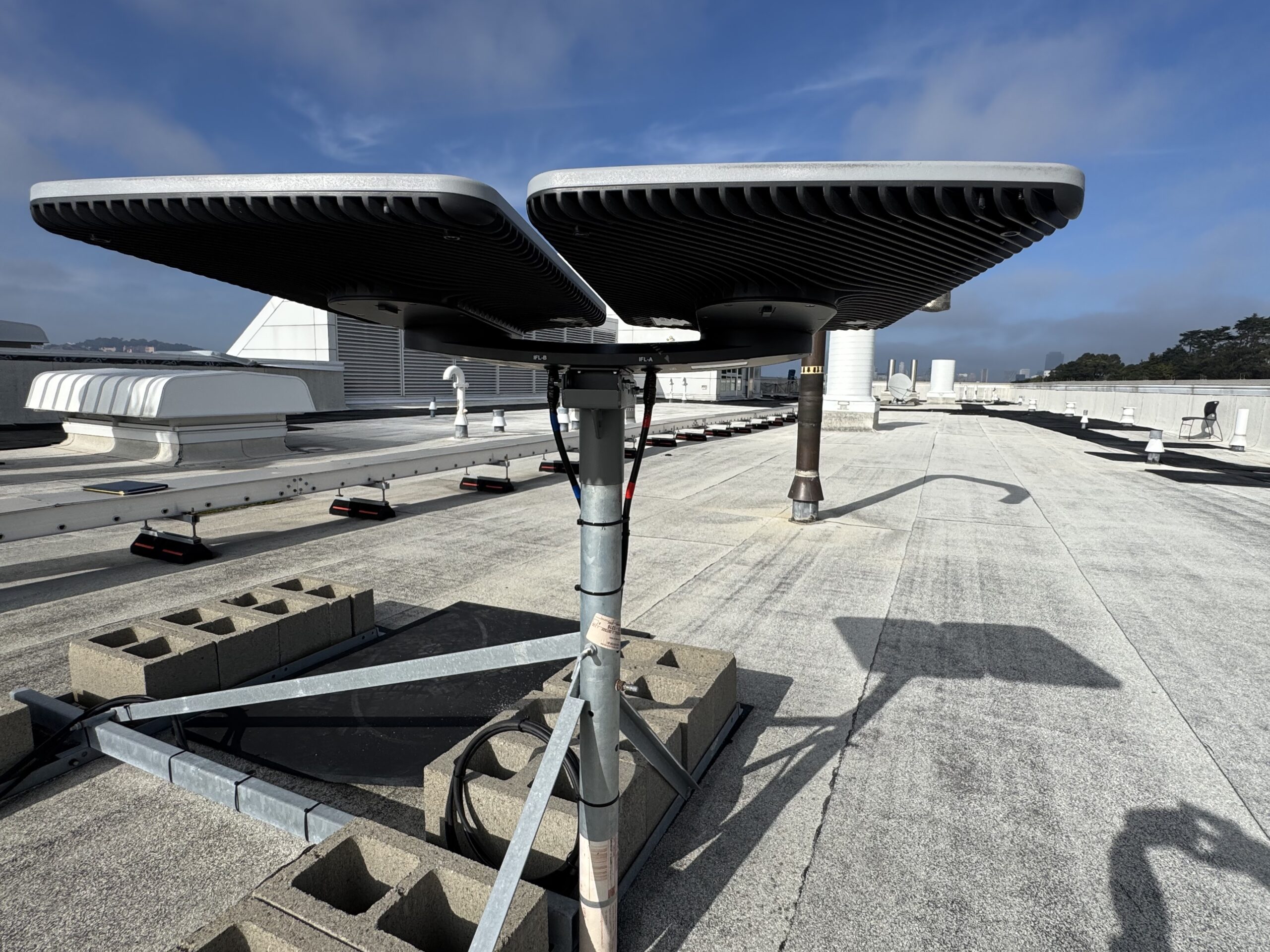
At Remote Satellite Systems, we understand that in a hospital, every moment matters. Communication breakdowns can delay emergency responses, disrupt coordination, and put patient safety at risk. That’s why when San Francisco General Hospital needed a dependable backup communication network for its facilities, we designed a blended satellite system engineered for reliability, speed, and long-term support.
This project demonstrates how advanced technology, practical engineering, and hands-on partnership can come together to strengthen an institution’s emergency readiness.
A Hospital That Can’t Afford Downtime
As one of the largest and busiest public hospitals in Northern California, San Francisco General must remain connected through every situation—from citywide power outages to major disasters. Traditional cellular and fiber networks are vulnerable to congestion or damage during emergencies, so the hospital needed a solution that would guarantee voice and data connectivity no matter what happened on the ground.
Our team developed a fully integrated blended communication system linking two separate hospital buildings located several blocks apart. Both structures now share the same satellite connection, ensuring instant redundancy and uninterrupted communication across their emergency network.
What Makes a Blended System Different
A blended system merges multiple connection types—satellite, LTE, and priority cellular—into a single, intelligent network. This design continuously monitors all available pathways and automatically routes traffic through the fastest, most reliable option.
For San Francisco General, this means:
- Automatic failover protection if one network experiences congestion or failure.
- Simultaneous data and voice support, keeping staff connected in real time.
- Priority cellular integration using FirstNet SIM cards to give emergency personnel network access even when public networks are overloaded.
- LEO satellite connectivity through providers such as Intelsat’s OneWeb, offering faster speeds and lower latency than traditional geosynchronous systems.
These combined capabilities create a communication safety net that adapts to changing conditions without user intervention.
Engineering the System from the Ground Up
Every installation we complete begins with engineering, not sales. For this project, our team evaluated the hospital’s existing infrastructure, antenna locations, and cable pathways before finalizing the system design. The two facilities were connected through one satellite gateway, allowing both to operate from a unified communications hub.
Our work included:
- Mounting flat-panel antennas for optimal performance and reduced maintenance.
- Running dedicated cabling through complex hospital structures.
- Designing intuitive control layouts so staff can quickly access key functions.
- Providing detailed documentation to preserve institutional knowledge.
The completed network allows administrators and emergency personnel to communicate instantly between departments, campuses, and external agencies—even during severe disruptions.
Speed and Simplicity Through LEO Innovation
Traditional geosynchronous (GEO) satellite systems have served as reliable backups for decades, but their high orbit introduces latency that can affect data transfer speed. The shift to Low Earth Orbit (LEO) satellites such as Starlink and OneWeb represents a major advancement in performance.
For San Francisco General, that improvement was immediately clear. The LEO-to-GEO configuration we implemented delivers:
- Significantly faster data transfer rates.
- Easier setup and operation for non-technical staff.
- Minimal maintenance thanks to antennas with no moving parts.
By combining the proven reliability of GEO systems with the responsiveness of LEO networks, the hospital gained a resilient, future-ready communication backbone that can evolve as technology advances.
More Than Installation: Training and Ongoing Support
A system is only as effective as the people who use it. That’s why our partnership with San Francisco General didn’t end after installation. We provided in-depth training for their teams, outlining clear procedures for testing, maintenance, and emergency operation.
We also developed a comprehensive support manual that details every cable, device, and connection. Hospitals experience frequent staff changes, and maintaining operational knowledge is essential. This documentation ensures the next person in line can quickly understand and manage the system, regardless of turnover.
Our clients also know they can reach us directly. We answer support calls in real time, not through automated systems. That immediate response gives organizations confidence that help is only a phone call away.
Setting a New Standard for Emergency Communication
The San Francisco General Hospital project shows how blended networks can redefine what emergency communication looks like. By integrating advanced technology with thoughtful engineering and ongoing service, we built a system that doesn’t just work during crises; it thrives in them.
This approach reflects our broader mission: to help institutions move beyond isolated tools and toward intelligent, resilient systems that protect lives and sustain operations.
Partnering for the Future
As technology continues to evolve, our focus remains the same: designing systems that serve real people in real-world conditions. Hospitals, emergency agencies, and critical infrastructure providers need communication solutions they can count on, no matter the challenge.
At Remote Satellite Systems, we’re proud to deliver exactly that.
If your organization is exploring communication upgrades or blended network options, we’d be glad to share our expertise. Contact our team to learn more about how we design, install, and support systems that keep communities connected when it matters most.