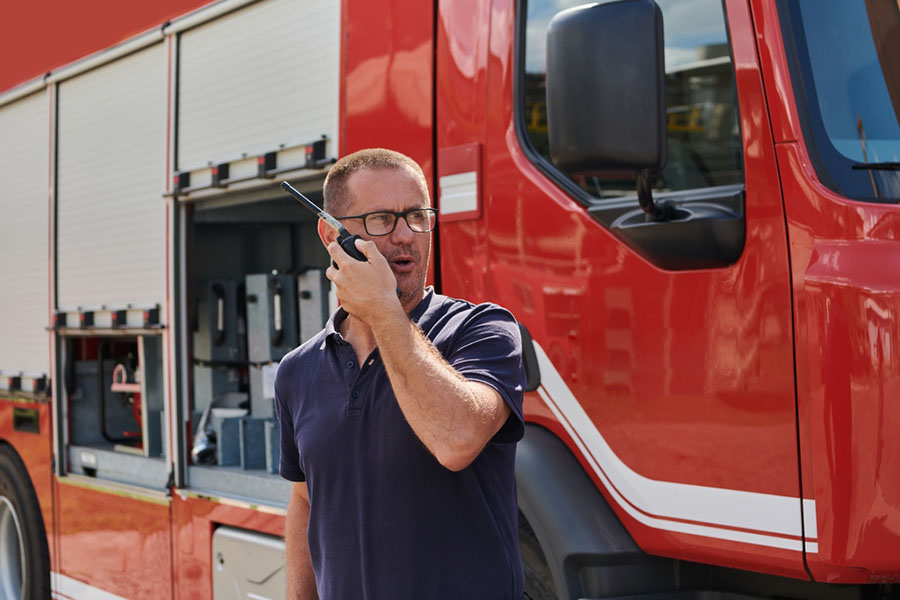
El Niño 2026-2027 preparedness should include a thorough review of the communications tools first responders will depend on if severe weather disrupts cellular networks, internet service, or other conventional infrastructure. Current forecasts point to a very strong El Niño during the 2026-2027 winter, making advance planning especially important.
At Remote Satellite Systems, we recommend reviewing three areas before severe weather arrives so teams are not discovering equipment or connectivity gaps during an emergency:
• Handheld devices: Confirm field equipment is current, functional, charged, and ready to deploy.
• Satellite voice solutions: Establish alternate ways to make calls when terrestrial service is unavailable.
• Satellite/cellular backup: Build redundancy so teams are not relying on a single connection.
Storm impacts cannot be predicted at the individual-facility level months in advance, but communications readiness can. Preparing equipment, connectivity, and deployment procedures now gives response teams a stronger foundation if heavy rain, flooding, power loss, or damaged infrastructure affects normal operations.
Prepare Before the Storm Tests Your Network
At Remote Satellite Systems, we build communications systems for the moments when conventional infrastructure cannot be taken for granted. The strengthening El Niño heading into winter 2026-2027 is a timely reminder for first responders, emergency operations centers, government agencies, utilities, and other critical organizations to review their readiness before conditions deteriorate.
Severe storms can create several problems at once. Power may fail, physical infrastructure can be damaged, and cellular networks may become congested just as demand increases. Waiting until an event is underway to discover outdated equipment or an untested backup link adds unnecessary risk, so we focus on identifying vulnerabilities early and creating multiple paths for voice and data communications.
Start With the Equipment in Responders’ Hands
A resilient system is only useful if field personnel can access it. Handheld communication devices should be part of every pre-season review, particularly equipment that has been stored for long periods or is approaching the end of its useful life.
We recommend confirming that:
- Devices power on and hold a charge
- Batteries and accessories are in usable condition
- Software or firmware is current where applicable
- Personnel know which equipment they are expected to deploy
- Replacement hardware is addressed before an emergency begins
Updating handheld equipment does not mean replacing devices simply because something newer exists. We want to make sure the hardware assigned to response personnel is dependable, supported, and compatible with the broader communications plan so teams can deploy with confidence.
Add a Satellite Path for Voice Communications
Dedicated dialup voice services remains essential during an emergency, yet traditional calling can become difficult when local networks are damaged or overloaded. Handheld Satellite phones provide an alternate path that does not depend on nearby terrestrial infrastructure in the same way, giving organizations another option when conventional service becomes unreliable.
We can also engineer satellite internet into a broader system that supports compatible voice applications and calling services. Dejero gateway components can also help manage or blend available IP connections, including satellite and cellular links, so critical traffic has multiple redundant routes adding to reliability.
This gives response teams additional flexibility instead of tying communications to a single carrier or connection. We design each configuration around the facility, operational requirements, coverage needs, and existing equipment rather than applying the same package to every organization.
Build Satellite and Cellular Redundancy Together
Backup communications are strongest when one alternative does not simply replace one primary connection. A cellular-only solution can still be affected by a fatal Core Cellular Network failure, congestion or tower outages, while satellite alone may not always be the most efficient path for every type of traffic.
We design blended systems that can use satellite and cellular connectivity together. Remote Satellite Systems offers solutions using Dejero gateway technology to aggregate multiple network services and create a broader communications environment than a single provider can deliver.
For first responders, that redundancy can support:
- Voice and data communications
- Access to cloud-based applications
- Secure connections to private networks
- Fixed-site and mobile operations
- Emergency operations centers and field deployments
Our objective is continuity. If one path becomes unavailable or degraded, another connection can help maintain access to the communications resources personnel need without forcing the entire operation to depend on one vulnerable service.
Test the Plan Before Conditions Change
Equipment alone is not preparedness. Teams also need to know the system works and understand how to use it before severe weather arrives, which is why testing should be part of the readiness process rather than something saved for an emergency.
We encourage organizations to test backup equipment, verify connectivity, review authentication and access procedures, and make sure designated personnel understand how systems are activated or deployed. Equipment that has been sitting unused should not be assumed ready simply because it performed properly during a previous test.
Our work extends beyond supplying hardware. We help organizations plan, integrate, deploy, and support communications systems built around operational requirements, including solutions for first responders, public safety agencies, emergency operations centers, and facilities where continuity is essential.
Make Communications Part of Your El Niño Readiness Plan
A very strong El Niño does not guarantee a specific storm or outage at a particular location, but it provides a clear reason to review preparedness before floods and winter conditions intensify. Handheld hardware, satellite voice options, and satellite/cellular redundancy should all be evaluated before they are needed in the field.
At Remote Satellite Systems, we have spent decades helping organizations build communications strategies designed to perform under pressure. If your El Niño 2026-2027 preparedness plan includes updating field equipment or strengthening backup voice and data connectivity, contact us to discuss a system engineered around your operational needs.