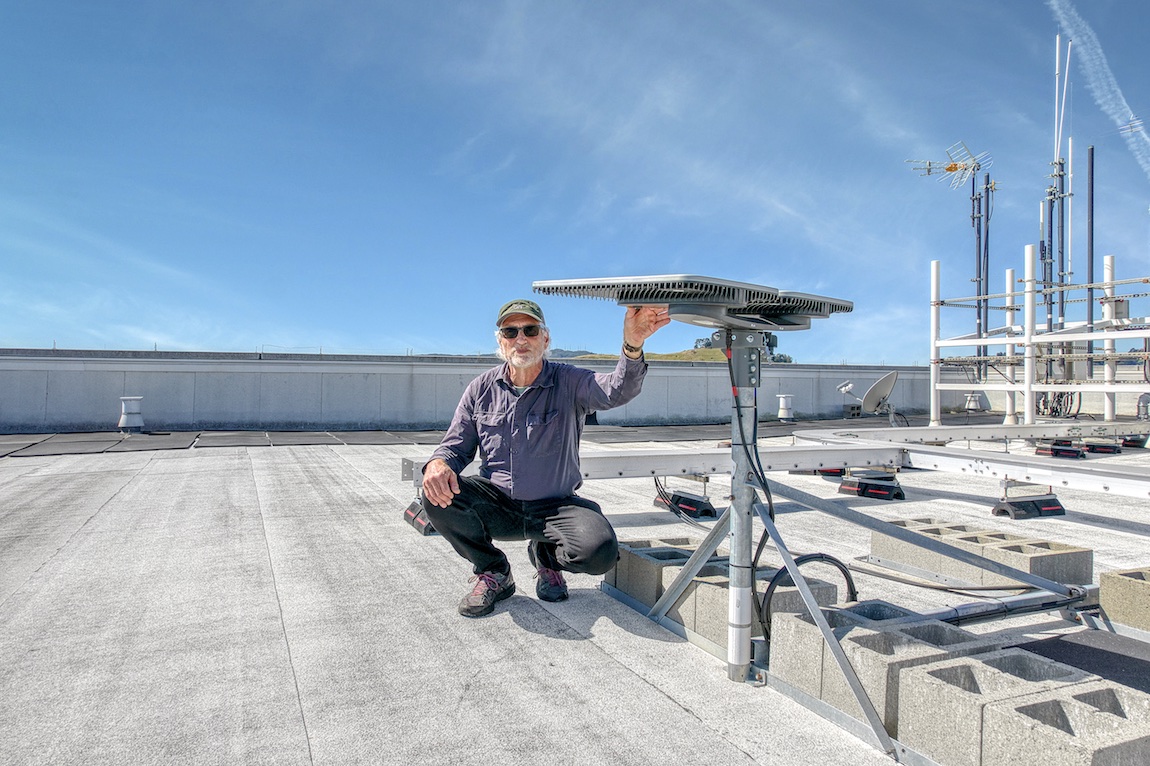
At San Francisco General Hospital, we upgraded an older emergency backup satellite communications system to a faster, lower-latency low Earth orbit, or LEO, platform designed for mission-critical backup communications. The result was a more resilient emergency network that supports voice and data, operates independently from the hospital’s primary IT environment, and can scale across multiple buildings on campus.
This project mattered because modern emergency response depends on more than a backup phone line. Hospitals need reliable connectivity for voice calls, shared applications, cloud-based tools, and coordinated response across departments and locations.
Key outcomes of the project included:
- A major speed increase over the previous geostationary satellite system
- A dedicated emergency LAN separate from the hospital’s production network
- Scalable connectivity for additional buildings using existing campus infrastructure
- Stronger redundancy through a blended communications approach that incorporate multipath satellite and LTE cellular connections.
- WiFi hotspot nodes for smart device connectivity.
This kind of deployment reflects the way we approach emergency communications at Remote Satellite Systems: plan carefully, build for real-world use, and support long-term readiness with training and documentation.
Why This Upgrade Mattered
At Remote Satellite Systems, we focus on backup and emergency communications, with in-building solutions as a core specialty. Our work is centered on helping organizations stay connected when traditional networks are disrupted, especially in environments where uptime, clarity, and control are essential.
That made San Francisco General Hospital an important case study. The hospital already had an emergency communications system in place, but it was built on older geostationary satellite technology. That legacy setup had served its purpose, yet newer LEO technology opened the door to a much better user experience, stronger performance, and more flexibility for emergency operations.
This was not just a hardware refresh. It was a strategic upgrade designed to improve resilience for a major public hospital that serves the city in critical situations.
Moving From Legacy GEO to Modern LEO Connectivity
One of the biggest improvements in this project was the shift from older geosynchronous satellite service to a newer enterprise LEO platform. The previous system could support basic emergency communications, but bandwidth was limited and latency was noticeably higher. In practice, that meant it worked best for a very small number of users and simpler applications.
The upgraded system changed that significantly. By moving to LEO, we were able to deliver a connection that felt much closer to a traditional terrestrial internet experience. Faster speeds and lower latency made the system more usable for modern emergency workflows, including cloud-based tools and shared digital resources that emergency teams increasingly rely on.
The rooftop installation also reflected how satellite technology has evolved. Instead of older mechanically pointed antennas, the hospital received a dual flat-panel antenna system with broad sky visibility. That helped support continuous satellite tracking without the complexity of traditional moving antenna hardware.
Building a Standalone Emergency Network Inside the Hospital
A critical part of the San Francisco General deployment was the network design inside the building. We did not connect the emergency system into the hospital’s primary production network. Instead, we built a standalone local area network dedicated to emergency service communications.
That distinction matters. By keeping the emergency communications environment separate, we help reduce conflicts with existing cybersecurity policies, simplify control of the emergency system, and create a communications layer the client can depend on during a crisis.
Inside the hospital, the deployment included the core components needed for a dedicated emergency network, including routing, multiple Wi-Fi hotspot nodes, firewall, and switching infrastructure. From there, the system could support both voice and data use cases for continuity planning and emergency operations.
This approach also made the solution easier to document, manage, and train around, which is a major part of long-term system success.
Scaling Beyond One Building
One of the most interesting parts of this case study was the campus-wide potential. San Francisco General is not a simple one-building environment. The hospital campus includes older infrastructure, underground pathways, and additional buildings that still need access to reliable communications during an emergency.
We traced available infrastructure and used the site’s internal connectivity pathways to extend the emergency network beyond the main hospital building. That allowed the same satellite uplink to support additional locations, including other Department of Public Health offices several blocks away.
This type of scalability is one of the strongest advantages of a well-designed in-building emergency communications system. Instead of thinking in terms of a single room or a single endpoint, we can design around broader operational needs.
That can include:
- Dedicated phones at key stations
- Emergency operations workstations
- Wi-Fi hotspot nodes for smartphones and other personal wireless devices.
- Connectivity in satellite buildings across a campus
- Focused deployments for nursing stations or response teams
The result is a system built around actual emergency use, not just theoretical coverage.
Voice Still Comes First in an Emergency
Even with better broadband performance, voice remains a top priority in emergency communications. That came through clearly in this project and in our broader approach to first responder and continuity planning.
A hospital may need data connectivity for collaboration tools, cloud platforms, and shared documents, but none of that replaces the importance of dependable voice service. In many emergency scenarios, the first question is still simple: who needs to call whom, and how quickly can that happen? By creating WiFi hotspot nodes, users are able to use their smartphones and other wireless devices directly connecting to the network using existing Apps and basic WiFi calling techniques greatly expanding end-user functionality.
That is why our solutions are designed with flexible voice options in mind. In some environments, that means integrated voice and data. In others, a voice-first design may be the right fit. The key is building around the customer’s procedures, priorities, and operational expectations rather than forcing a one-size-fits-all model.
That kind of planning and tailored design is central to how we position our consulting, training, and emergency communications services.
Documentation, Training, and Real Readiness
Technology alone does not create preparedness. A major takeaway from the San Francisco General project was the importance of documentation and training.
We believe emergency communications systems need to be understandable and usable long after installation day. That means documenting network maps, equipment locations, credentials, phone assignments, and physical layouts in a way that supports ongoing maintenance and real-world troubleshooting. It also means training user groups so they know how the system works and how it fits into their emergency procedures.
A backup system is only as useful as the team’s ability to use it under pressure. That is why readiness requires more than equipment. It requires process, clarity, and repetition.
What This Case Study Shows About Modern Emergency Communications
The San Francisco General Hospital project shows how far emergency backup communications have come. With enterprise LEO connectivity, standalone network architecture, scalable campus design, and a strong focus on voice, documentation, and training, this upgrade created a more capable and resilient foundation for hospital emergency operations.
For organizations evaluating their own continuity planning, this case study is a reminder that emergency communications should not be treated as an afterthought. They should be designed with the same care as any other mission-critical system with long term goals and built-in scalability in mind.
At Remote Satellite Systems, we build emergency communications solutions for real operating environments, and this project is a strong example of what that looks like in practice.